The digital shelf is a crowded place. Every pixel, every word, every image on your product page battles for attention, and perhaps no element is more critical yet more often overlooked than the product description. It’s the silent salesperson, the conversion catalyst, the bridge between a casual browser and a committed buyer. But crafting compelling, high-quality, and SEO-friendly descriptions for an entire catalog is a monumental task—one that has led to the rise of various Types of Product Description Generators: AI vs. Template & Key Features.
These tools promise to revolutionize how e-commerce businesses create content, offering a spectrum of automation from simple templates to sophisticated artificial intelligence. But which path is right for your brand? And what should you look for when making this pivotal decision?
At a Glance: Key Takeaways
- AI vs. Template: Template-based generators offer quick, structured content for basic needs, while AI tools use advanced algorithms to create unique, varied, and often SEO-optimized descriptions.
- AI's Power: AI product description generators leverage natural language processing (NLP) and machine learning (ML) to analyze product details and generate compelling, human-like copy.
- Key AI Features: Look for tools offering deep input customization (tone, audience, keywords), high-quality and clear output, and robust SEO/formatting controls.
- Top Contenders (2026): Juma, Hypotenuse AI, Originality AI, and Scalenut stand out for advanced features, while many others offer excellent free or niche solutions.
- Human Oversight is Crucial: AI is a powerful assistant, not a replacement. Always review, edit, and optimize AI-generated content for accuracy, brand voice, and genuine human connection.
- Actionable Steps: Choose your generator, provide detailed inputs, refine style, generate, then critically review, edit, and optimize for SEO before publishing.
The Never-Ending Quest for the Perfect Product Description
Every e-commerce entrepreneur knows the drill: brilliant product in hand, eager to sell, but then comes the dreaded blank page. How do you succinctly capture its essence, highlight its benefits, speak to your ideal customer, and weave in those elusive keywords that will help search engines find you?
Historically, this has been a manual, time-consuming, and often expensive endeavor. You either wrote them yourself (and possibly hated every minute), hired a copywriter (a smart investment, but not always scalable for hundreds or thousands of products), or copied and pasted manufacturer descriptions (a cardinal sin for SEO and brand uniqueness).
Enter the product description generator – a class of tools designed to take the heavy lifting out of content creation. These aren't just for speed; they're about consistency, scalability, and, increasingly, intelligence.
Deciphering the Tools: What Are Product Description Generators?
At their core, product description generators are software applications designed to help you create written content for your products quickly. They aim to solve the problem of content creation bottlenecks, helping businesses large and small populate their online stores with persuasive copy.
While the term "product description generator" might seem broad, the real innovation and utility come from their underlying technology. We're primarily talking about two main types: template-based and AI-powered.
AI vs. Template: A Head-to-Head Showdown
Understanding the fundamental difference between AI and template-based generators is crucial for choosing the right tool for your specific needs. It's not about which is inherently "better," but which is better for you.
Template-Based Generators: The Structured Approach
What they are: These tools typically offer pre-defined structures or forms where you plug in specific product details (e.g., product name, a few features, target audience). The tool then slots these inputs into a pre-written paragraph or bullet-point format. Think of it like a "fill-in-the-blanks" worksheet.
Pros:
- Simplicity and Speed: Extremely easy to use, even for beginners. You can generate basic descriptions in seconds.
- Consistency: Ensures a uniform structure and tone if you consistently use the same template.
- Cost-Effective: Often free or very low-cost, as they require less complex technology.
- Good for Basic Needs: Sufficient for simple products that don't require complex storytelling or nuanced benefits.
Cons: - Limited Creativity and Uniqueness: Descriptions can sound generic, formulaic, and lack a distinct brand voice.
- Repetitive Output: If you use the same template across many products, your descriptions will start to sound very similar, which can bore customers and potentially flag with search engines for duplicate content.
- Basic SEO Capabilities: While you can input keywords, the generator itself doesn't "understand" SEO or intelligently weave keywords into natural language.
- Scalability Challenges: For large inventories, manually filling in templates for hundreds or thousands of unique products can still be time-consuming and tedious.
AI-Powered Product Description Generators: The Intelligent Evolution
What they are: AI product description generators are powerful software tools using natural language processing (NLP) and machine learning (ML) algorithms. They analyze product features, benefits, and relevant information you provide (and sometimes even external data) to create compelling, high-quality, and often SEO-friendly product descriptions. Their goal is to streamline content creation, improve customer engagement, and ultimately increase sales by generating thorough and informative descriptions that sound human-written.
Pros:
- High-Quality, Unique Output: AI can generate diverse, creative, and human-sounding descriptions, significantly reducing the risk of sounding generic or robotic.
- Scalability: Can generate descriptions for vast inventories quickly, often with bulk upload capabilities.
- Enhanced SEO Integration: Many AI tools are designed with SEO in mind, intelligently integrating keywords, suggesting optimal lengths, and even understanding search intent.
- Customization and Tone: Offers advanced options for specifying tone (witty, professional, casual), target audience, and specific angles, allowing for strong brand voice alignment.
- Benefit-Driven Copy: Excels at transforming features into benefits, appealing directly to customer desires.
- Versatility: Many AI tools can generate multiple variations of descriptions, ad copy, social media posts, and more from the same input.
Cons: - Requires Good Input: The "garbage in, garbage out" principle applies. The quality of the output heavily depends on the clarity and detail of your input.
- Potential for Errors/Inaccuracies: While highly advanced, AI can sometimes misinterpret context, generate factual inaccuracies, or produce "fluff" that needs editing.
- Cost: While many offer free plans or trials, advanced AI tools with robust features typically come with a subscription fee.
- Over-reliance: There's a risk of blindly trusting AI output without critical human review, which can lead to off-brand content or errors.
The Verdict: For businesses seeking genuine scalability, unique and engaging content, and a strong competitive edge in SEO, AI-powered generators are the clear choice. Template-based tools serve as a good starting point for very small operations or those with extremely simple product lines, but they quickly hit their limitations when creativity, customization, and uniqueness are priorities.
What Makes an AI Generator Truly Shine? Key Features to Look For
Not all AI generators are created equal. As you explore the market, keep these critical factors in mind to ensure you choose a tool that truly elevates your e-commerce content strategy.
Level of Input Customization
A powerful AI isn't a mind-reader; it's a sophisticated interpreter of your instructions. The more detailed and nuanced information you can provide, the better the output.
- Multiple Features & Benefits: Can you list a dozen unique selling points, rather than just three?
- Tone of Voice: Does it allow you to select specific tones (e.g., luxurious, playful, authoritative, conversational) or even input examples of your brand's voice?
- Keywords: Can you provide a list of target keywords and instruct the AI on their priority or placement?
- Target Audience: Can you define who you're selling to (e.g., "young professionals," "eco-conscious parents," "tech enthusiasts") so the AI can tailor its language?
- Negative Keywords/Phrases to Avoid: Essential for brand safety and avoiding clichés.
- Length Control: Ability to specify word count or character limits for different platforms.
- Saved Prompts/Templates: For consistency across product lines, the ability to save and reuse your optimal prompt structures (like Juma offers) is invaluable.
Quality and Clarity of Output
This is the ultimate test. Does the AI generate descriptions that are genuinely useful, persuasive, and free from common AI pitfalls?
- Benefit-Focused: Does it effectively translate features into tangible benefits for the customer?
- Clear and Concise: Is the language easy to understand, free of jargon (unless specified), and to the point? Avoids "fluff."
- Grammar and Spelling: Should be impeccable.
- Natural Flow: Does it read like a human wrote it, avoiding robotic or awkward phrasing?
- Originality: Is the content truly unique, or does it feel like a rehash of common phrases?
- Variations: Does it offer multiple output options from a single prompt, allowing you to pick the best fit or combine elements?
SEO and Formatting Control
For product descriptions to perform, they need to be found and readable.
- Keyword Integration: The ability to naturally and strategically weave in primary and secondary keywords, not just stuff them.
- Formatting Options: Support for bullet points, bolding, short paragraphs, and other scannable elements crucial for online readability.
- Platform-Specific Optimization: Can it generate descriptions tailored for specific platforms like Amazon (e.g., A+ content style, specific character limits), Shopify, or eBay? Scalenut, for instance, excels here.
- Meta Descriptions & Titles: Some advanced tools can also generate optimized meta descriptions and product titles.
Meet the Contenders: Top AI Product Description Generators in 2026
The AI landscape is rapidly evolving, with new tools and features emerging constantly. Here’s a look at some of the leading AI product description generators, highlighting their strengths and ideal use cases based on comprehensive reviews and future projections.
Best for Custom Prompts & Team Collaboration
- Juma (formerly Team-GPT): Often considered best for building detailed, custom prompts and ensuring consistent outputs across product ranges. It works with multiple AI models (e.g., ChatGPT, Claude), allows saving/reusing prompt templates, and adding custom instructions. This is a game-changer for maintaining brand voice and quality at scale within a team, offering a free plan and paid team plans.
Best for Scale & Bulk Operations
- Hypotenuse AI: Built specifically for scale, Hypotenuse AI enables bulk CSV imports, can auto-enrich product data from the web, and is designed to match brand voice for large e-commerce teams managing multi-platform listings. Offers a 7-day free trial, then paid plans starting at $19/month for 50,000 words.
- Copysmith.ai (Describely): Another strong contender for bulk creation, allowing you to generate numerous product descriptions customizable by tone, language, and word count. It also offers content evaluation features and a convenient Chrome plugin.
Best for Quick, SEO-Friendly & Free/Budget Solutions
- Ahrefs: Known for quick, SEO-friendly descriptions in 48+ languages. It's free, requires image upload, and allows tone/format selection but has relatively basic customization. Ideal for quick drafts and multilingual needs.
- Copy.ai: Offers fast generation of multiple product description variations. It's free, requires product name/info input, but has basic customization and no saving/organizing features. Great for generating ideas rapidly.
- Omnisend: Converts simple inputs into persuasive, benefit-driven descriptions quickly. It's free and easy to use but lacks advanced customization for tone or format. A solid choice for straightforward, benefit-focused copy.
- LogicBalls: Provides instant, concise outputs with word count control, ideal for small businesses seeking simple and quick descriptions. It's free but lacks advanced formatting or deep customization.
- Voilà: A simple, free tool for quick, benefit-focused descriptions that works across various formats (emails, stores, documents) but doesn't support advanced options or output saving.
- Scalenut: Generates multiple outputs simultaneously (four options) and adheres to platform-specific rules (e.g., Amazon-style formatting, word count), supporting SEO keywords and tone selection. It's free and excellent for platform-specific needs.
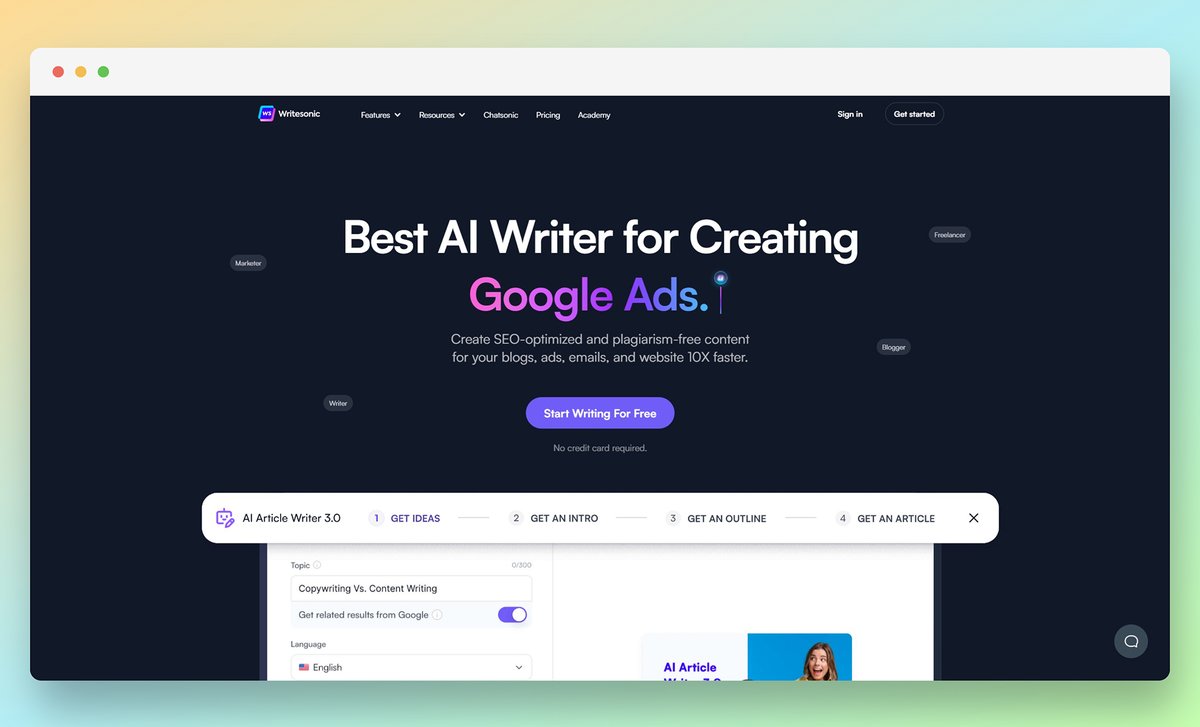
- Writesonic: Creates fast, SEO-friendly copy with tone selection, with no login needed for basic use. It's free but limits free generations to three per day without sign-up and lacks advanced formatting.
- ChatGPT (OpenAI): The foundational AI chatbot, capable of generating product descriptions from prompts. While not specifically designed as a product description tool, its API solutions can be trained into custom workflows for highly versatile, on-demand content creation. The free version is good for experimentation, while paid tiers (Plus, API access) offer more power and capacity.
Best for Personalized & Advanced SEO
- Originality AI: Excels at personalized, SEO-aware descriptions, allowing fine-tuning results and customization by tone, audience, language, and keywords. Offers 20 free generations before requiring a paid plan. Its focus on originality and SEO makes it a strong choice for unique content.
- Frase.io: While more of an SEO content optimization tool, Frase.io uses NLP/ML to optimize content for search engines, identifies popular topics/keywords, generates content briefs, and analyzes competitor content. Its integration with content creation means it can indirectly support highly optimized product descriptions.
- AISEO.ai: Specializes in SEO-friendly content, offering templates, customization options, keyword lists from trusted sources, and team collaboration features, making it a comprehensive solution for SEO-focused businesses.
Comprehensive AI Writing Assistants (Beyond Just Descriptions)
These tools are versatile and can handle much more than just product descriptions, making them excellent choices if you need an all-in-one content assistant.
- Jasper AI: A robust AI that generates various content types (including long-form articles, social media posts, and descriptions) using advanced ML/NLP. It offers extensive editing/optimization tools and multi-language support, perfect for businesses with diverse content needs.
- Rytr: An easy-to-use AI writing tool for a wide range of tasks (blogs, social media, product descriptions), optimizing for SEO with keyword suggestions and integrating with platforms like WordPress and Shopify.
- Text Cortex: A powerful AI writing tool for marketing, sales, and website copy, connecting to over 1000 platforms and offering text analysis features like sentiment analysis and entity recognition.
Specialized Tools
- Grammarly: While not a generator, Grammarly is an AI-powered writing enhancement tool focusing on grammar, spelling, punctuation, style, and tone. It uses deep learning for accurate feedback and context understanding, making it an essential companion for editing any AI-generated text.
- ClosersCopy: Optimizes e-commerce product page descriptions and titles by asking targeted questions about benefits, features, and ideal buyers. It focuses on generating SEO-friendly, converting copy centered on value and differentiation.
No matter which tool you choose, remember that our product description generator is a powerful asset in your e-commerce toolkit, but it's only one piece of the puzzle.
Putting AI to Work: Your Action Plan for E-commerce Success
Integrating an AI product description generator into your workflow can significantly boost efficiency. Here’s a step-by-step guide to maximize its potential:
- Choose the Right Generator: Begin by thoroughly researching tools based on their features (SEO, quality, speed), your budget, and your specific business objectives. Consider a free trial to test a few before committing.
- Input Detailed Product Information: The more data you feed the AI, the better its output will be. Provide basic details like product name, size, color, material, and unique features. Crucially, list specific benefits for the customer (e.g., "durable, scratch-resistant fabric" becomes "Enjoy years of wear thanks to our ultra-durable, scratch-resistant fabric"). Don't forget to include relevant keywords you've identified through research.
- Select Your Preferred Style and Tone: This is where you inject your brand's personality. Choose a tone (e.g., formal, casual, witty, luxurious, adventurous) that aligns with your brand's voice and resonates with your target audience. Experiment with different tones to see what works best.
- Generate Descriptions: With your inputs locked in, use the tool to produce the initial descriptions. Don't be afraid to generate multiple variations.
- Review and Edit: The Human Touch is Crucial: This is arguably the most important step. Critically assess the AI-generated content for:
- Accuracy: Are all facts about the product correct?
- Grammar, Spelling, and Typos: Even the best AI can make mistakes.
- Tone Appropriateness: Does it truly sound like your brand?
- Clarity and Flow: Is it easy to read and understand? Is there any "fluff" that can be trimmed?
- Formatting: Are bullet points used effectively? Is the text scannable?
- Optimize for SEO:
- Keyword Research: If you haven't already, conduct thorough keyword research to understand what your customers are searching for.
- Natural Integration: Thoughtfully integrate your primary and secondary keywords into the body text, headings (if applicable), titles, and meta descriptions. Avoid keyword stuffing.
- High-Quality Content: Ensure the content is informative, unique, and genuinely helpful, as this is a primary driver for search engine rankings.
- Image/Video Optimization: Don't forget to optimize accompanying images and videos with relevant alt tags and descriptions that include keywords.
- Publish and Track: Post the refined descriptions on your e-commerce store or marketplace. Then, monitor engagement metrics (like time on page, bounce rate) and conversion rates to evaluate the effectiveness of your new descriptions. Use this data to iterate and improve.
Beyond the Hype: Real Talk About AI-Generated Content
While AI product description generators are powerful, it's essential to approach them with realistic expectations. They save time and effort by automating content creation, producing precise and targeted descriptions. However, it's crucial to analyze and modify AI-generated content for accuracy and relevancy, as quality can vary significantly between tools and even between generations from the same tool.
Key considerations often overlooked:
- Brand Voice Nuance: While AI can mimic tones, truly capturing the subtle nuances of a strong, established brand voice often requires human refinement.
- Emotional Connection: AI is excellent at logic and information, but the deep emotional resonance that truly converts can sometimes require a human touch in storytelling.
- Legal Compliance: Always double-check AI output for any claims that could have legal implications.
- Avoiding Generic Output: The AI's greatest strength (speed) can also be its weakness if you don't provide unique inputs and meticulously edit. Generic inputs lead to generic outputs.
- The "Why": AI can describe what a product is and how it helps, but a human copywriter often excels at articulating the deeper "why" – the aspirational reason a customer truly wants it.
SEO optimization with targeted keywords and high-quality, human-reviewed content is vital for performance. The right tool should align not just with your company’s objectives, but also with your capacity for human oversight and refinement.
The Human Touch Remains Indispensable
In the age of AI, it might seem like human creativity is becoming obsolete. But the opposite is true. AI empowers humans to be more creative, by handling the repetitive and time-consuming tasks. Your role evolves from content generator to content editor, strategist, and fine-tuner.
You are the guardian of your brand voice, the ultimate arbiter of accuracy, and the one who ensures that every word truly resonates with your customers. AI is a co-pilot, not an autopilot. It gives you a fantastic first draft, but it's your expertise and understanding of your audience that transforms that draft into a conversion powerhouse.
Your Next Step Towards Smarter Descriptions
The landscape of product description generation is rich with innovation. Whether you opt for the simplicity of a template or the advanced intelligence of an AI, the goal remains the same: to provide your customers with the clearest, most compelling information possible.
Start by assessing your needs: volume, budget, desired level of uniqueness, and internal resources. Then, explore the tools that align with those requirements. Experiment with different generators, test their outputs, and most importantly, remember that no AI can replace the critical eye and creative input of a human expert. Use these tools as powerful accelerators, freeing you to focus on the strategic decisions that truly drive your e-commerce success.