In today's hyper-competitive online marketplace, simply listing products isn't enough. Shoppers—and increasingly, AI shopping agents—demand rich, detailed, and engaging descriptions that go beyond basic features. This is where integrating product description generators with e-commerce platforms becomes not just an advantage, but a necessity for scaling growth and staying visible in the evolving digital landscape. Imagine transforming weeks of manual content creation into mere hours, all while enhancing your product visibility by 3-5x. That's the power we're talking about.
At a Glance: Key Takeaways for E-commerce Success
- Agentic Commerce is Here: AI shopping agents like ChatGPT, Perplexity, and Claude now drive 37% of product discovery, requiring a new approach to product content called Generative Engine Optimization (GEO).
- Manual Descriptions are Unsustainable: Writing descriptions manually for hundreds or thousands of SKUs is prohibitively time-consuming and expensive, costing dozens to hundreds of hours and significant budget.
- AI Offers Massive Efficiency: Product description generators can slash content creation time by up to 88%, generating high-quality, GEO-optimized content in minutes or hours.
- Look for Key Features: Essential capabilities include bulk generation, brand voice training, SEO/GEO optimization, e-commerce platform integration, and output variations.
- Simplified is a Standout: For small to medium businesses, all-in-one platforms like Simplified offer comprehensive features (descriptions, images, social, design) at significant value, demonstrating real-world results like 47% AI platform traffic increases and 22% higher conversion rates.
- Human Oversight is Crucial: AI excels at scale, but human review, prompt engineering, and qualitative refinement are vital for accuracy, emotional depth, and brand consistency.
- Integration is Key: Seamlessly connecting your generator to platforms like Shopify or WooCommerce via CSV upload or direct API ensures smooth workflows and rapid deployment of optimized content.
- Monitor for Growth: Track organic search, AI referral traffic, and conversion rates to continuously refine your strategy and maximize your AI investment.
The New Frontier of E-commerce: Agentic Commerce and GEO
Gone are the days when optimizing for Google alone guaranteed visibility. Welcome to 2026, where "agentic commerce" is reshaping how consumers discover and buy products. AI shopping agents—think advanced versions of ChatGPT, Perplexity, and Claude—are now central to the buyer's journey, driving a significant 37% of product discovery. These sophisticated agents don't just browse keywords; they interpret, compare, and recommend based on semantic richness, detailed specifications, use cases, and benefits far beyond simple features.
This paradigm shift demands a new form of optimization: Generative Engine Optimization (GEO). Unlike traditional SEO, which often focuses on keywords and backlinks, GEO prioritizes structured data, semantic depth, and comprehensive context to ensure your products are perfectly understood and recommended by AI. For e-commerce businesses, this means content needs to be not only human-friendly but also machine-readable and semantically rich. Products optimized for GEO can see 3-5 times more visibility in AI-driven search results, making the right content strategy a potent growth engine.
Beyond Manual Labor: Why AI Product Description Generators Are Essential
Let's face it: manually crafting compelling product descriptions for a growing inventory is a Herculean task. A single quality description can take 15-20 minutes. Multiply that by 100 SKUs, and you're looking at 25-33 hours of work. For 500 products, that balloons to 125-165 hours. The cost, both in terms of time and human resources, quickly becomes unsustainable, especially when you need to update content for seasonal changes or new product lines.
This manual bottleneck often leads to generic, inconsistent, or incomplete descriptions that fail to captivate shoppers or satisfy AI agents. This is precisely where AI product description generators step in as game-changers. These tools can perform the same work in minutes or hours, at a fraction of the cost, delivering up to 88% time savings. They automate the creation of accurate, consistent, and engaging content at scale, freeing your team to focus on strategic initiatives rather than repetitive writing tasks. They're built to analyze product features, target audience data, and brand guidelines to craft content that converts.
What to Look For: Key Features of a Powerful Generator
Choosing the right AI description generator is critical. It's not just about producing text; it's about integrating a tool that genuinely enhances your e-commerce operations. Here’s what a great AI product description generator should offer:
- Bulk Generation Capability: Essential for any store with 100+ SKUs. The ability to upload a CSV and generate hundreds of descriptions in a single batch is non-negotiable.
- Customizable Templates & Workflows: Pre-built templates tailored for different product categories (e.g., apparel, electronics) save time, while flexible workflows allow you to define steps from input to output.
- Brand Voice Training: Your brand has a unique personality. The AI should be trainable with your existing content and style guides to ensure consistent tone, style, and messaging across all descriptions.
- SEO and GEO Optimization: Beyond basic keyword stuffing, the tool should understand semantic SEO for Google and Generative Engine Optimization for AI shopping agents, providing detailed specifications, use cases, and benefit-driven language.
- E-commerce Platform Integration: Seamless connectivity with your e-commerce platform (Shopify, WooCommerce, Amazon, etc.) via direct integration or easy CSV import/export is paramount for efficient workflow.
- Multiple Output Variations: The ability to generate several versions of a description allows you to choose the best fit or A/B test for optimal performance.
- Built-in Editing & Refinement Tools: AI isn't perfect. Integrated editing features, often AI-assisted, help you quickly review, fine-tune, and personalize generated content.
- Pricing Scalability: Solutions should offer pricing tiers that accommodate small businesses just starting out, as well as larger enterprises with extensive catalogs.
- Image Generation Integration (Bonus): Some advanced platforms can generate product images alongside descriptions, offering a complete content solution.
Navigating the Options: Choosing the Right Tool for Your Business
The market is buzzing with AI product description generators, each with its strengths. Your choice will depend on your catalog size, budget, and specific content needs.
- Simplified: An excellent all-in-one AI marketing platform designed for comprehensive content creation. It excels with bulk generation via AI Workflows (CSV upload for 100+ products), an AI Brand Book for consistent tone, and GEO-optimized output. Crucially, it integrates product image generation, Shopify, and WooCommerce, and supports over 30 languages. At around $20/month, Simplified offers remarkable value, especially for small to medium businesses seeking an end-to-end solution for descriptions, images, social posts, and more. One boutique, for instance, generated 300 descriptions in 2 hours, seeing a 47% increase in AI platform traffic and a 22% higher conversion rate.
- Hypotenuse AI: This tool specializes in descriptions, metadata, and content at scale for e-commerce teams. It offers exceptional bulk capabilities, deep integrations with major platforms (Shopify, Amazon, Walmart, Target, Etsy, Salesforce, NetSuite), and robust SEO/GEO optimization in 30+ languages. Starting at $29/month, it's ideal for mid-size to large businesses with 500+ products needing advanced data enrichment and continuous optimization.
- Describely: Known for its high accuracy (98%), Describely is a specialized e-commerce content platform trusted by large retailers like Target Australia for thousands of weekly descriptions. It features bulk creation, a content rules engine for strict brand guidelines, and strong GEO optimization, with integrations across Shopify, WooCommerce, Wix, Akeneo, and Squarespace. Positioned for enterprise-grade reliability, its estimated higher pricing makes it suitable for large organizations prioritizing maximum accuracy and GEO for agentic commerce.
- Other Noteworthy Tools:
- Copy.ai: Versatile for various content types but often lacks deep e-commerce integration and advanced bulk features.
- Jasper: A powerful enterprise platform with strong brand voice matching, but it's typically more expensive and complex if your primary need is just product descriptions.
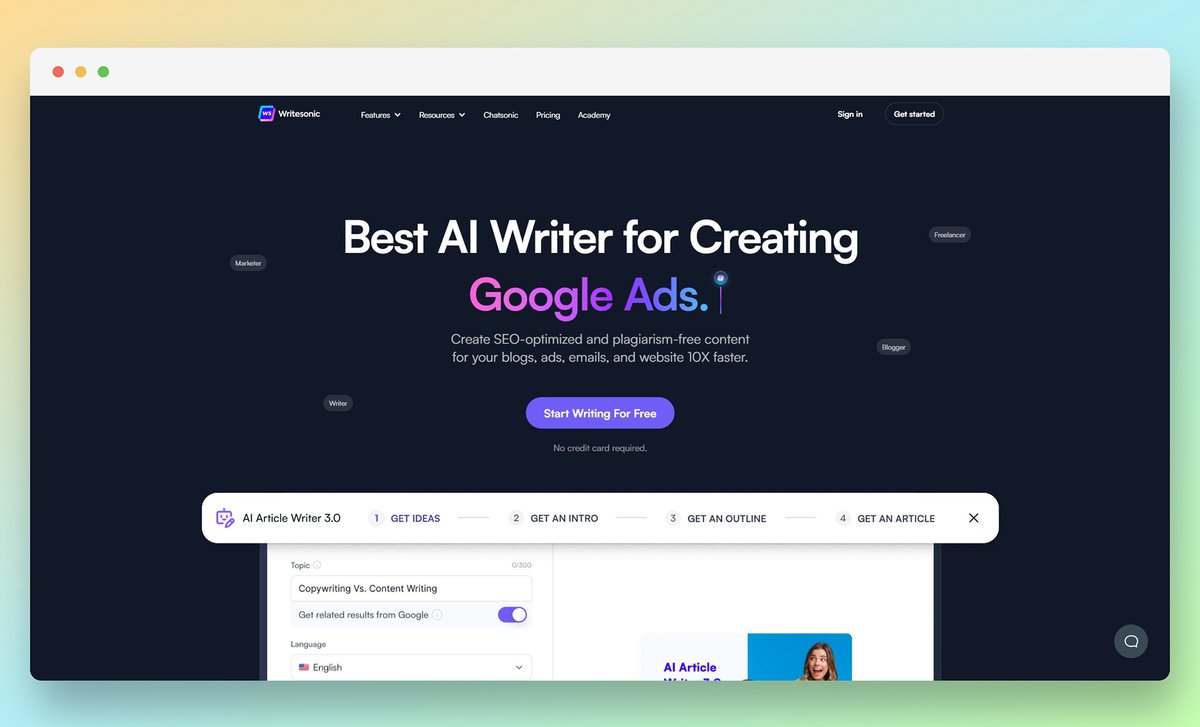
- Writesonic: A budget-friendly option with bulk generation, but output quality can be inconsistent.
- Shopify Magic: Free for Shopify users but basic, lacks bulk functionality, and isn't GEO-optimized for agentic commerce.
- Anyword: Focuses on data-driven predictive performance scoring and analytics for A/B testing, making it valuable for optimizing existing content or generating variations with performance in mind.
- ChatGPT Custom GPT: Highly customizable for smaller catalogs (with a $20/month subscription) but lacks the bulk automation and integrated workflows of dedicated e-commerce tools.
When making your choice, consider your current catalog size (small: Shopify Magic, ChatGPT Custom GPT, Simplified; medium: Simplified, Hypotenuse AI; large: Describely, Hypotenuse AI), your budget, and whether you need a complete content workflow (like Simplified) or highly specialized accuracy (like Describely).
Your Integration Blueprint: A Step-by-Step Guide
Successfully integrating a product description generator into your e-commerce platform isn't just about subscribing to a tool; it’s about establishing a streamlined workflow that maximizes efficiency and impact. Here’s a practical blueprint, often mirroring the powerful capabilities of platforms like Simplified.
Step 1: Lay the Groundwork – Brand Voice and Objectives
Before you generate a single word, define your core strategy.
- Set Clear Objectives: What do you hope to achieve? Faster content creation, better SEO, higher conversion rates, improved AI visibility, or global market penetration? Your goals will guide your tool selection and prompt engineering.
- Define Your Brand Voice: This is crucial for consistency. In your chosen generator's "Brand Book" or settings (e.g., Simplified's AI Brand Book), input your brand's tone (e.g., playful, authoritative, luxurious), target audience, key selling propositions, and provide sample descriptions or marketing copy. This trains the AI to speak in your brand's unique language.
Step 2: Prepare Your Product Data
The AI is only as good as the data you feed it.
- Gather Essential Information: Compile your product data into a CSV file. Include product name, category, key features, benefits, unique selling propositions, materials, dimensions, price, and SKU. The more detailed your input, the better the output.
- Standardize Your Data: Ensure consistency in how features are listed, categories are named, and other data points are formatted. This reduces ambiguity for the AI.
Step 3: Set Up Your AI Workflow
This is where you tell the AI exactly what to do.
- Create a Generation Workflow: In platforms like Simplified, you'll create a "Product Description Generation" workflow. This involves configuring a series of steps:
- Input: Specify that the input will be a CSV file.
- AI Agent Configuration: Define what the AI should generate (e.g., a product description, 3-5 bullet points, GEO tags, FAQs). You can often select category-specific templates (e.g., "Electronics," "Apparel").
- Review Gate: Include a step for human review. This is essential for quality control.
- Output: Configure the output format, typically an enriched CSV, ready for export.
Step 4: Generate in Bulk
This is where the magic happens.
- Upload Your CSV: Upload your prepared product CSV (e.g., 100+ items).
- Initiate Batch Generation: Select your configured workflow and category template, then start the generation process. For 100 products, this can take as little as 5-15 minutes.
- You're now utilizing AI to scale your content creation, transforming hours into minutes. If you're looking for an efficient way to generate content, our product description generator can streamline this process significantly.
Step 5: Review and Refine
Human oversight remains invaluable.
- Targeted Review: The system will often flag a percentage (e.g., 10-15%) of descriptions for human review, focusing on those that might need extra attention for accuracy, nuance, or emotional appeal.
- AI-Assisted Editing: Use the platform's integrated editing tools, which often leverage AI themselves, to quickly make adjustments, add specific details, or inject more personality. This stage combines AI speed with human precision.
Step 6: Generate Supporting Content (Optional, but Recommended)
Some platforms offer a complete content ecosystem.
- Integrated Image Generation: If your tool (like Simplified) includes AI image generation, utilize it to create compelling visuals and variations for your products, ensuring consistency between your descriptions and imagery.
- Social Media & Ad Copy: Expand your workflow to generate social media posts, ad copy, and email snippets related to your new product descriptions. This ensures a consistent message across all marketing channels. A complete product launch, including descriptions, images, social posts, ad copy, and emails, can be done in 45 minutes with an all-in-one platform, compared to 8+ hours manually.
Step 7: Export and Integrate with Your E-commerce Platform
The final step gets your content live.
- Download Enriched CSV: Download the CSV file containing your newly generated, reviewed, and refined product descriptions (and any other content).
- Import to Platform: Use your e-commerce platform's native import function (e.g., Shopify's bulk import, WooCommerce CSV importer) to upload the enriched data. Verify that all fields map correctly.
- Verify on Live Site: Always double-check a few product pages on your live store to ensure the descriptions display correctly and all content is accurate.
Step 8: Monitor Performance and Optimize
Integration isn't a one-time task; it's an ongoing process.
- Track Key Metrics: Monitor organic search traffic, crucial for traditional SEO, but also pay close attention to AI referral traffic and product visibility in AI search. Track conversion rates on product pages with AI-generated descriptions.
- Analyze and Iterate: Use performance data to identify what's working and what's not. Refine your AI prompts, templates, and brand voice guidelines based on real-world results. Continuous optimization ensures your content remains competitive and effective.
This entire process, from initial setup (30 minutes) to generating and reviewing 100 products, can take as little as 30 minutes, drastically cutting down the manual effort of 25-33 hours.
More Than Just Words: Expanding Your AI-Powered Content Strategy
The benefits of integrating AI description generators extend far beyond simply producing text. Think of it as building a comprehensive content factory.
- Seasonal Updates Made Easy: Need to refresh descriptions for a holiday sale or a new season? AI can update hundreds of product descriptions with relevant themes in minutes, a task that would otherwise consume days. For example, 200 products can be updated in just 1 hour with AI, compared to 12+ hours manually.
- Global Reach with Localization: AI tools that support multiple languages can instantly translate and localize your descriptions, ensuring industry-specific glossaries and cultural nuances are respected. This allows you to foster a genuine presence in diverse markets without the immense cost of human translation for every product.
- Consistent Marketing Touchpoints: Many all-in-one platforms can generate not just descriptions but also social media posts, email snippets, and ad copy from the same product data. This ensures a cohesive brand message across all channels, reinforcing your value proposition. Simplified, for instance, helps avoid annual savings of over $1,400 compared to combining separate tools for descriptions, images, and social media.
The Indispensable Human Element: Guiding Your AI Co-Pilot
While AI offers unprecedented speed and scale, it's crucial to remember that it's a powerful tool, not a replacement for human ingenuity. Embracing AI as a creative partner is key to unlocking its full potential.
- Crafting Killer Prompts: The quality of AI output directly correlates with the quality of your input. Detailed, specific prompts regarding word count, tone, target audience, key features, and desired benefits are vital. Think of prompt engineering as the new copywriting skill.
- The Human Review Gate: AI can generate, but humans must curate. Your team's role in reviewing, editing, and fact-checking content ensures accuracy, uniqueness, and adherence to cultural sensitivities. For high-end, highly technical, or unique products that require a strong emotional connection, reserving human expertise for the final polish or even full creation can be invaluable.
- Adding Emotional Depth and Nuance: While AI can generate persuasive text, true emotional connection often requires a human touch. Your writers can take AI-generated drafts and infuse them with personality, empathy, and unique storytelling that resonates deeply with your audience.
- Continuous Learning: Human feedback is critical for the AI's learning process. By consistently monitoring, editing, and adjusting your prompts and brand guidelines, you're actively teaching the AI to produce better, more aligned content over time.
Proving the Payoff: Measuring Your AI's Impact
Integrating AI isn't just about efficiency; it's about measurable growth. To truly understand the value, you need to track key performance indicators:
- AI Referral Traffic: Monitor the percentage of your product discovery originating from AI shopping agents. An increase here signifies successful GEO optimization.
- Organic Search Visibility: Track improvements in traditional search engine rankings and organic traffic for your newly described products.
- Conversion Rates: Compare the conversion rates of products with AI-generated, optimized descriptions against previous versions or a control group. Higher conversion rates directly translate to increased revenue.
- Time and Cost Savings: Quantify the hours and money saved by using the AI generator compared to manual content creation. This provides a clear ROI.
- Brand Consistency Metrics: Conduct qualitative reviews to ensure the AI maintains your brand voice across different product categories.
By regularly analyzing these metrics, you can refine your AI strategy, adapt to evolving consumer behaviors, and ensure your investment continues to drive tangible business outcomes.
Ready to Redefine Your E-commerce Growth?
The future of e-commerce is here, driven by intelligent agents and personalized content. Integrating product description generators with your e-commerce platforms is no longer a luxury but a strategic imperative. It's about empowering your business to scale content creation, master agentic commerce, and consistently deliver rich, engaging product experiences that captivate both human shoppers and AI algorithms.
Start by evaluating your current content bottlenecks and exploring the tools that align with your business goals, catalog size, and budget. Test, implement at scale, and continuously optimize. The businesses that embrace this evolution today will be the ones leading the charge in tomorrow's digital marketplace, accelerating growth and building deeper connections with a digitally savvy audience. Your growth engine awaits.